
Share Dr. Abigail Hafer's obituary with others.
Invite friends and family to read the obituary and add memories.
Stay updated
We'll notify you when service details or new memories are added.
You're now following this obituary
We'll email you when there are updates.
Select your format and elements to print

IN LOVING MEMORY OF Dr. Abigail Hafer
Abigail
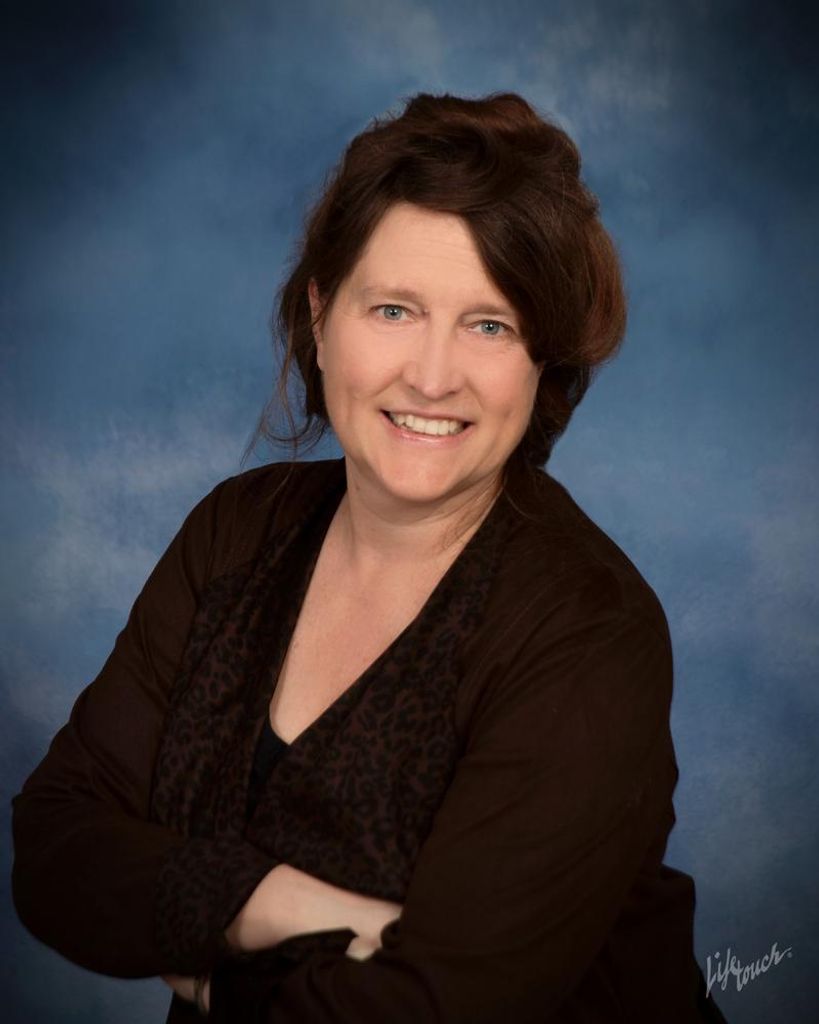
Hafer
Mar 31, 1958 — Jul 31, 2025
Dr. Abigail Hafer's Obituary
Abby Hafer:
Evolutionary Biologist, Educator, Writer, Pro-Science Activist
By Alan M. MacRobert, husband
Dr. Abigail Ann Hafer of Bedford, Mass., passed away on July 31, 2025, after a nearly two-year standoff with cancer – in hospice care snuggled with her husband of 28 years, Alan M. MacRobert. She was 67.
Abby Hafer was born at Cape Canaveral, Florida, on March 31, 1958, to Frederick Leroy Hafer and Mary Stewart Hafer. Fred was stationed there at what was then Patrick Air Force Base, developing rocket technology. Among Abby's earliest memories were her mother bringing her out to their hot, sunny backyard to watch missile test launches and telling her this was something important. People would be going to outer space.
After several transfers around the country, the family settled in Bedford when Abby entered 4th grade. She graduated from Bedford High School in 1976 – after helping to start, and running in, Bedford High's first girls' cross-country team. At first the school refused to recognize girls' track as a sport. But the girls persisted, found a devoted coach, and went on to come in second in the state finals in the second year of the team's existence.
Abby continued to be athletic almost all her life. When she and Alan got together when she was 38, she figured that she had already run at least 25,000 miles. In effect, she had run around the Earth.
She attended Swarthmore College and, shaped by her childhood love of nature and its living things, she graduated from Swarthmore with a degree in biology in 1980. Having also been a disk jockey for the college radio station, one of the secret steam-tunnel crawlers, a lock-picker to get her and her friends into the gym late at night – she showed me her set of lock picks – and she was a recognized Ashton House bar-nekkid snow roller.
She started graduate school at UCLA and then transferring to Oxford University in England. For the intervening summer she worked as the US Observer on a Japanese factory fishing ship in the Bering Sea off Alaska. Her job was to monitor what the ship caught in American waters, stop them from keeping any illegal catch, and report by radio link to US officials. In this role she was an honorary ship's officer, ate in the officer's mess, and had unimpeded access to shipboard operations on deck and in the factory below decks. As the only female, the only non-Japanese person, and the only native English speaker on board, she acted boldly, made friends, lost an arm-wrestling contest with the captain in the officer's mess and then challenged him to a push-up contest and beat him in front of his officers -- which only enhanced her shipboard reputation. Luckily the captain had a sense of humor and ran an honest ship. Under her supervision, illegal bycatch went back in the ocean.
At Oxford Abby joined Balliol College and earned a D.Phil. (what we in the U.S. call a PhD) in zoology, animal behavior in particular. She continued post-graduate work there and stayed in England eight years.
At Oxford she helped run house activities in Balliol, rowed on the women's crew team and earned a championship oar, and for a while she lived on a houseboat moored at Port Meadow, a magical place near where Lewis Carroll, on picnics, first told the real-life little Alice stories of wonderland down the rabbit hole. Abby befriended Richard Dawkins in her animal behavior group, and she judged her Balliol collegemate Boris Johnson to be an obnoxious boor.
On returning to the US during the recession of the early 1990s, she found jobs as a children's-sleep researcher, and a salesperson of circadian-rhythms advice for a company that she realized was selling scientifically baseless stay-awake solutions to the operator of the Four Corners Power Plant in Arizona. She taught a course on marine mammals for Northeastern; "at least that got me back on the water," she said.
Her longtime hopes for a tenured professorship led to years of teaching as an underpaid adjunct professor ("adjunct" means "temporary part-time") at several Boston-area colleges. As many as three at once. But tenure-track positions were vanishing everywhere; hiring adjuncts was cheaper. She finally settled into a long-term position as a Senior Lecturer professor of human anatomy and physiology at Curry College in Milton. There she taught a generation of nursing students about the workings of the human body. She did some research on the side at the Harvard School of Public Health and other institutions, but she realized teaching could be a real joy. Especially teaching serious students like the would-be nurses. When course registration opened they would compete to get into her class even though it was a hard one.
In 1994, while back living with her parents in Bedford on North Road to save money, Abby decided she really ought to re-acquaint herself with her old home town and make new friends. From high-school days, she remembered that many of the most interesting, fun, involved people in town had seemed to revolve around the First Parish Unitarian Church. So, never mind that she was an atheist descended from a proud line of atheists, she started showing up Sundays at the big white church on Bedford Common.
And one of the first sermons she heard was by a local astronomer and church member, Alan M. MacRobert. I was an editor of Sky & Telescope magazine, and my talk was titled "The Exact Location of God: an astronomer's perspective." (Short version: Where's God? The universe shows no trace of morality, caring, compassion, or purpose out to at least a billion light-years in any direction. Quite the opposite, in fact. If we believe in those things, and want them to exist at all, we must create them ourselves, accessing the better angels of our own nature.)
I had already kinda noticed Abby. She was sitting in the back row, right there. I secretly really hoped she would be impressed, or at least agree.
Well, sparks kinda flew. I was a young widower caring for two small children, Lucy and Andrew. My mother Ruth was living with us part of the time to help take care of the kids. Abby became a regular on our family picnics and outings. I spotted her brilliance, her close scrutiny of nature, and her long-held practice of stopping everything for one minute a day to look at beauty. Uninterruptedly, for at least one minute. It could be a painting in one of her art books, or a tree branch stark against the sky. She explained that when she was an impoverished grad student she decided to fill her life with richness and good things that didn't take money. Spontaneous beauty was one. She continued that practice all her life.
On our first date I opened my backyard observatory and showed her a faraway, rather dim globular star cluster in the telescope. She examined it long and hard in the eyepiece, fiddling with the exact focus, for a couple of minutes. Visitors to the telescope almost never showed that kind of protracted attention and scrutiny. I thought to myself, "This is a keeper."
One thing led to another, and another, and on May 31, 1997, before a cheering crowd here in this room, she and I were married. Lucy and Andrew, who were then 11 and 8, wanted to be in the ceremony too, so they were.
She then adopted them as her legal children, binding herself to be responsible for them just as much as me until their adulthood.
--------------------------------
As an evolutionary biologist by training, Abby became increasingly known to the world as a fighter against aggressive pseudoscience and ignorance-driven myths – creationism in particular – and for the amazing power of science and experiment and reason for exploring reality.
This second career of hers really began when the minister, Rev. John Gibbons, asked her to give a Darwin Day sermon in church. In composing it she realized that public advocates for evolutionary theory were doing it wrong. The scientific debate about evolution it was settled more than 100 years ago. This was not a scientific debate now, but a political one.
She wrote: "I firmly believe that when science gets pushed into the political arena, people must use arguments that will work in the political arena. That means the arguments must be short; easy to understand; catchy and easy to repeat, and funny, while containing bullet-proof science. Call me old-fashioned but I insist that my arguments be true, as well.
"For this reason," she said, "my talks are described as 'a combination of TED talk and standup comedy', or, 'standup with slides'."
She knew that everyone cares about their own body. So, drawing on her anatomy and physiology teaching, she chose to focus on the many ways in which your body is a sloppy, inefficient, just-good-enough kludge of whatever had happened to be available for mutation and natural selection to work upon – with no trace of design, meaning planning aforethought, at any step of the way.
Her first example was, of course, men's testicles. They hang dangerously outside the body because human body temperature is too high for human sperm production. From teaching anatomy and physiology she knew that whenever she got onto the human reproductive system, the students always looked right up and paid attention. Many animals don't have our kludgey dangling-testicle problem. "So, who did God think was more important to get right?" she would ask. "Humans – or frogs?"
Another example was how badly designed our eyes are, compared to the much clearer, more efficient eye structures of cephalopods. "So," she would say, "Who does God think is more important: us – or squid?"
One public talk led to another and another, and soon she was speaking to podcasters, radio personalities, and humanist and freethinker groups all over. And her topics widened. Her "Beyond the Gender Binary" routine told of creatures in nature that routinely change from male to female or vice versa, such as flounders and the famous clownfish, that brightly colored fish of coral reefs. And there's the little marine creature Tetrahymena thermophila that has not just two sexes but seven sexes, all of whom are fertile with most of the others. There were the hundreds of animal species documented to show homosexual activity and bonding, and animals forming polyamorous families like the penguin throuples who raise chicks together. And there was the famous immortal jellyfish, which can defy death forever by reverting to an earlier stage of life when in trouble. "You want to talk about Natural Law?" Abby would say. "Oh, let me tell you about nature!"
She was starting a campaign. Conservative jurists, such as some of the current Supreme Court, are trying to find in Natural Law rational support for their irrational prejudices. Natural Law doctrine originates from Saint Thomas Aquinas writing in the 13th century. Another of Abby's zingers was: "Thirteenth-century biology is to modern biology what 13th-century astronomy is to modern astronomy. So, does NASA have to fly its rockets thinking the planets revolve around the Earth?"
One of my favorite pictures of her is exhorting a California Freethought Day crowd outdoors on the steps of the California State House in Sacramento, priming them to lobby state reps to keep Intelligent Design out of public-school science classes. She briefed the crowd on some of the ways evolution has made us undesigned, sloppy kludges. The picture shows her holding up a big call-and-response sign for the crowd to shout when confronted with creationism: "BALLS!"
In 2015 she published her first book, The Not-So-Intelligent Designer: Why evolution explains the human body and intelligent design does not. She followed this with a history book: Darwin's Apostles: The men who fought to have evolution accepted, their time, and how the battle continues, co-authored with her friend David Orenstein. She also contributed chapters to the books Women v. Religion; The Case Against Miracles; Christianity in the Light of Science; and she wrote the massive chapter on the history of humanist approaches to sexuality for The Oxford Handbook of Humanism. The chapter has 236 references and bibliographic citations. It wore her to a frazzle.
With the help of our state representative Ken Gordon, she put together a science-education bill, H.491, that Ken introduced into the state legislature in 2023. It would require that only reality-based science – based on evidence from repeated actual research leading to general expert consensus – be taught as science in public schools.
This would give teachers, students, and families legal ground to resist pressure for schools to not say that vaccines work, or that Earth is billions of years old, or that evolution got us where we are. That's not much of a problem in Massachusetts. But her idea was for this to be model legislation that other states could copy. It's currently (2025) sitting in the legislature as a part of a broader education bill that remains un-acted upon.
Abby had a hand in an amazing number of things. She gave a talk at an American Humanist Association annual convention, met a lot of cool people there, and of course got recruited onto its board of directors. And from there she got on the board's executive committee that hired the AHA's new director, a social media whiz who is dragging the AHA into the 21st century. At the AHA's convention in 2023, Abby presented its Humanist of the Year award to the early climate researcher Dr. Michael Mann, who in 1998 published the famous, hockey-stick-like graph of global temperatures over the last thousand years. When Mann had first published, he had no idea that his life would be overwhelmed by industry-instigated vilification campaigns, years of aggressive falsehoods about himself, and death threats to him and his family –
but he showed the courage to stick with the reality of his climate research regardless, and continue work on the subject. Abby admired courage, and she considered it much too rare.
She served on the board of The Polyamory Foundation, helping to judge grant applications to advance understanding of ethical non-monogamy and the best practices for healthy group relationships. She was involved in Boston's Arisia science fiction convention, a rollicking highlight of the year every January. She loved DragonCon in Atlanta, the world's biggest sci-fi fandom convention, and she was twice a featured speaker in DragonCon's SkepTrack. She was driven by love of knowledge and love of people. When pickleball became a thing in Bedford of course she made friends with the picklers and learned the game, even if in her 60s she was the oldest and far from the fastest. She volunteered at the Head of the Charles crew race and was in training to become a crew referee. When she had a temporary remission of her cancer she took a curling lesson on ice, just because. I could go on.
---------------------------------
On the dashboard of Abby's car, looking expectantly out the passenger side of the windshield, was a realistic little toy plastic newt, or eft. It's bright orange. She found it at Walden Pond. He became Adventure Eft. He was always looking forward out the windshield, toward her next adventure.
She skied with the family and got good at it. She wanted me to mention how much she loved bicycling. As a grad student she bicycled across France, which was how she learned some of her French, and she was proud of the foreign cities she had bicycled -- from Reykjavik, Iceland, to Ouagadougou, Burkina Faso near the southern edge of the Sahara Desert.
What was she doing in Burkina Faso? Well, there's a story. She went to visit my stepsister Marilyn who was stationed there in the Peace Corps They had Marilyn helping to set up a French-language school in a remote, dusty, crowded and blazing hot town called Pissila, population 9,000. Burkina has over 100 local languages, and if you have any ambitions as you grow up, French, the lingua franca of West Africa, is your ticket out. Back home I was nervous. People asked me "What's Burkina Faso?" I explained, "It's the poorest country in Africa. It's just south of Al Qaeda in the Maghreb, and just east of the Boko Haram army raiding and kidnapping in northern Nigeria."
I was mighty glad when she got back from there. Of course she totally had a ball and was full of stories. Because she was a friend of Marilyn, the people she encountered in Pissila treated her as a friend too, though she did get stared at. She and Marilyn were the first whites many in the town had ever seen.
Abby loved people. Her friends were countless. Her special superpower was known: Putting people together who ought to find out about each other.
---------------------------------------
We both loved long walks in nature. Abby gloried in moving through the intricacy of evolved systems. We discussed them as we went. There's a key sign of an evolved system, rather than a designed one –
whether it be a rabbit, or a whole local ecology, or a corporate organizational structure that has drifted away from its organizational chart due to mutation and natural selection – or a scenic view of fields and trees and flowers. The key sign is that an evolved system displays a similar high level of complexity at every scale, from large to small. In other words: Whether you look at the whole thing, or zoom in on a part of it, or zoom in further, even microscopically, you find a similar level of rich complexity at every scale. Artificial, planned things almost never do this. Instead, the scale at which deliberate design occurred requires less information in order to specify it completely in the most efficient way. Here we're into deep mathematics and information theory. But in fact, that is precisely the judgment your brain unconsciously makes when you decide at a glance whether a thing looks natural or artificial.
This was the kind of thing we could end up talking about on our nature walks.
Abby's almost mystical love of nature owed a lot to her childhood times at the Hafer family's old hunting and fishing camp in the Maine wilderness, on West Grand Lake. She explored the forest and canoed on the lakes. As a child there, she built fairy villages of little stick-and-pine-needle houses. A generation later she introduced that art to her own children at camp, and then another generation later to her great-niece and nephew.
On the water she crept up silently to loons to marvel at their detailed beauty. She loved songs and stories at campfires at night. Her totem animal was the moose, and her totem bird was the owl.
She wanted a memorial bench with her name to be placed somewhere beautiful in town here after she was gone. Location still to be decided. And in her last weeks this summer, she decided what should be written on the bench, under her name: "Tell all the rocks and trees I love them."
Another phrase she had in the running was, "What a wonderful world."
She was unable to go to the family gathering at the camp this summer. So her cousin, Mary Lou Sauls Kelly, wrote a little song there that was sung in Abby's honor. Here it is. It's called, "Goin' 'round the bend."
(video plays)
Abby considered herself a radical – for reason, integrity, and humanity. As a result, her politics were leftist in many ways but not all. She held this truth to be self-evident: The inherent worth and dignity of every person. That happens to be UUism's own formal First Principle, as she found out thirty years ago right here.
She always considered herself a patriot. Having grown up in a military family headed by a West Pointer, she had a background sense of "Honor, Duty, Country" that was just sort of there.
She died distraught at the wreckage now being done to this country and its ideals. She and I were there in the historic Women's March and the March for Science in 2017, and many, many other events and protests and campaigns since then. She believed in liberty and justice for all. In fact she carried those words on a sign at demonstrations. She passionately supported Ukraine in its fight against the Russian fascist invaders and Russia's not-so-tacit supporter in the White House. So of course her friends included a local Ukrainian couple. She tried to do what little she could. Even in Abby's final month, as her cancer advanced out of control, there she was, on the front of the Common, weak, skinny, in a wheelchair, in the weekly Bedford Standout for Democracy, wearing her flag scarf and holding a flag-bedecked No King sign. To show hope, and to help comfort others. That happens every Friday afternoon from 5 to 6, by the way. Those No King yard signs you see around Bedford, echoing the town's Revolutionary War heritage, are partly her doing. So, of course they have flags on them. Not for what this country is, or some of what it has done, but for what it is supposed to be.
Going forward, I will try to remember the thing that Abby believed – echoing Gandhi – is the most crucial attribute for people who want to see a just and decent world: Not just knowledge and wisdom and good judgment, though those are essential. Not just kindness, though that is basic. Not just respect, though respect is even more basic than kindness. But, courage. As Gandhi said (despite his popular image of la-de-dah peace and love). For we the living, choosing courage over fear may become our biggest requirement as things proceed. She had it.
As an atheist she was never particularly afraid of death itself. In her notes to herself as she neared the end, she reminded herself this: "Enjoy your life." But Abby grieved many things that she would miss out on. The old age she was just beginning and planning. That she would not be here with me. That she would not be here to read to and show the world to her baby granddaughter Norah as she grows up. The new adventures and explorations she would not go on. The things she would not write. The rollicking conventions she would not attend and the parties she would not throw.
And, the future friends and communities that she would not help to bind together.
That last part, folks, is on us to do.
Hail and Farewell, Abby Hafer.
• Some of her ashes will be buried in the Memorial Garden of First Parish Unitarian-Universalist Church, 75 Great Road, Bedford, MA. Smaller portions will be buried at various locations that were special to her.
• Video of the memorial service, including most of the talk above:
• Obituary by the Bedford Citizen:
• Leave memories, comments, and/or pictures:
Funeral Services for Dr. Abigail Hafer
Memorial Service

Sunday
First Parish in Bedford, Unitarian-Universalist
Starts at 4:00 pm
Dr. Abigail Hafer's Guestbook

Visits: 8
This site is protected by reCAPTCHA and the
Google Privacy Policy and Terms of Service apply.
Service map data © OpenStreetMap contributors